

Why Legal Education Is Falling Behind (And Why That Should Worry You)
A practical reflection on CPD requirements and what they reveal about how the legal profession values learning
In France, lawyers are required to complete 20 hours of continuing professional development each year. In Australia and New Zealand, the requirement sits at 10 hours.
That is not a marginal difference. It is a structural signal.
Across other jurisdictions, the pattern becomes clearer. Sweden requires 18 hours annually. Italy operates on a 15-credit yearly expectation, with a 60-credit minimum across three years. It seems that in Europe, continuing legal education is treated as a baseline professional obligation rather than a compliance exercise.
Elsewhere, the picture shifts again. The United Kingdom has no minimum requirement at all. Singapore applies a sliding scale between 8 and 16 points depending on experience. Japan mandates ethics training but does not impose a clear annual hour requirement.
Placed in that context, Australia and New Zealand sit closer to the bottom than the top.
That raises a more uncomfortable question than simple comparison. Why is legal education not valued here?
What the Numbers Actually Reflect
Minimum CPD requirements are not just administrative thresholds. They reflect what a profession considers essential.
A higher requirement signals that ongoing learning is part of competent practice. A lower requirement suggests it is something to be fitted in around real work.
In Australia and New Zealand, the prevailing model rewards output. Busy is seen as productive. Billable hours are treated as the primary metric of value. A partner billing ten hours a day is recognised. A partner who spends time developing new capability, particularly in emerging areas like AI, often has to justify that time in ways that billable work never requires.
That is not an accident. It is a system built to prioritise doing over learning.
The Cognitive Reality of “Always Busy”
There is also a deeper issue beneath the structural one.
A lawyer operating in constant high-output mode is not just working hard. They are functioning in a sustained state of urgency. From a neuroscience perspective, this corresponds to high beta brainwave activity, a state associated with reactive thinking and immediate task execution.
High beta is useful when working through a dense contract under pressure or managing urgent client demands. It is not the state in which the brain learns effectively.
Meaningful learning requires a shift.
Gamma brainwaves are associated with integrating complex ideas. Alpha states support relaxed, receptive attention, the conditions under which structured learning actually occurs. Theta is linked to memory consolidation, where information becomes retained rather than temporarily processed.
When CPD is compressed into a lunch break between calls, none of these conditions are present. The activity may satisfy a requirement, but it does not produce learning in any meaningful sense.
This is how a profession can appear compliant while gradually becoming less informed.
Why This Matters More Now
The consequences of this gap are not theoretical.
The legal profession is currently undergoing a period of rapid change driven by artificial intelligence. Tools are reshaping how research is conducted, how documents are drafted, and how legal analysis is produced. The pace of change is faster than most firms are structurally equipped to absorb.
In that environment, a minimum requirement of 10 hours per year does not build capability. It builds the appearance of compliance.
Lawyers meet the requirement. They complete the hours. But they are not necessarily developing the understanding required to engage with the tools that are redefining their work.
That creates a widening gap between what the profession is doing and what it needs to understand.
The Case for Reframing CPD
If the goal of CPD is to maintain professional competence, then the current structure deserves reconsideration.
One practical step is straightforward. Introduce dedicated training in artificial intelligence as part of CPD requirements. An additional five hours per year focused specifically on how AI tools function, where they are reliable, and where they require human judgement would not be excessive. It would be proportionate to the scale of change already underway.
This is not about turning lawyers into technologists. It is about ensuring they understand the tools they are increasingly expected to use.
Because the risk is not just misuse. It is unrecognised ignorance.
You do not know what you do not know. In a period of significant transformation, those blind spots expand quickly if they are not actively addressed.
What Other Jurisdictions Are Signalling
When jurisdictions like France and others across Europe set higher expectations for continuing education, they are making an implicit statement about professional standards.
They are recognising that competence is not static. It requires sustained investment. It requires time allocated specifically for learning, not squeezed between other demands.
Australia and New Zealand, by contrast, are signalling something different. Whether intentional or not, the current framework suggests that minimal engagement with ongoing education is sufficient.
That may have been workable in a slower-moving professional environment.
It is harder to justify now.
The Question Going Forward
This is not ultimately a question about whether 10 hours should become 15 or 20.
It is a question about what the legal profession chooses to prioritise.
If learning remains secondary to output, CPD will continue to function as a compliance exercise rather than a capability-building tool. If the structure shifts to genuinely support ongoing education, the profession is better positioned to adapt to the changes already in motion.
France appears to understand that.
Europe appears to understand it.
The more relevant question is whether Australia and New Zealand are prepared to take it just as seriously.

Post a comment
You must be logged in to post a comment.
Related Posts
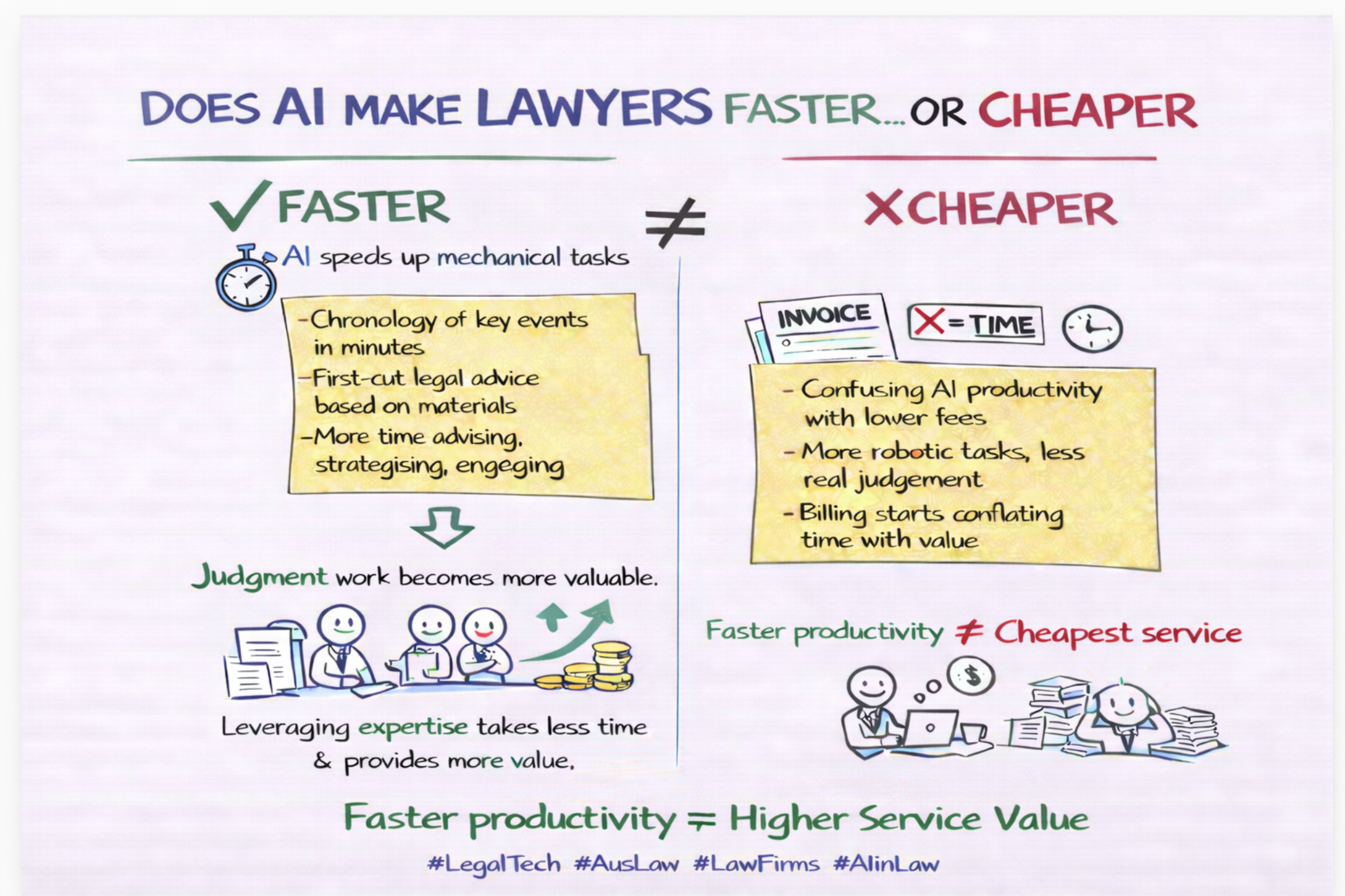
If AI Makes Lawyers Faster, Does It Make Them Cheaper? The Answer Isn’t What You Think.
If AI Makes Lawyers Faster, Does It Make Them Cheaper? The Answer Isn’t What You…
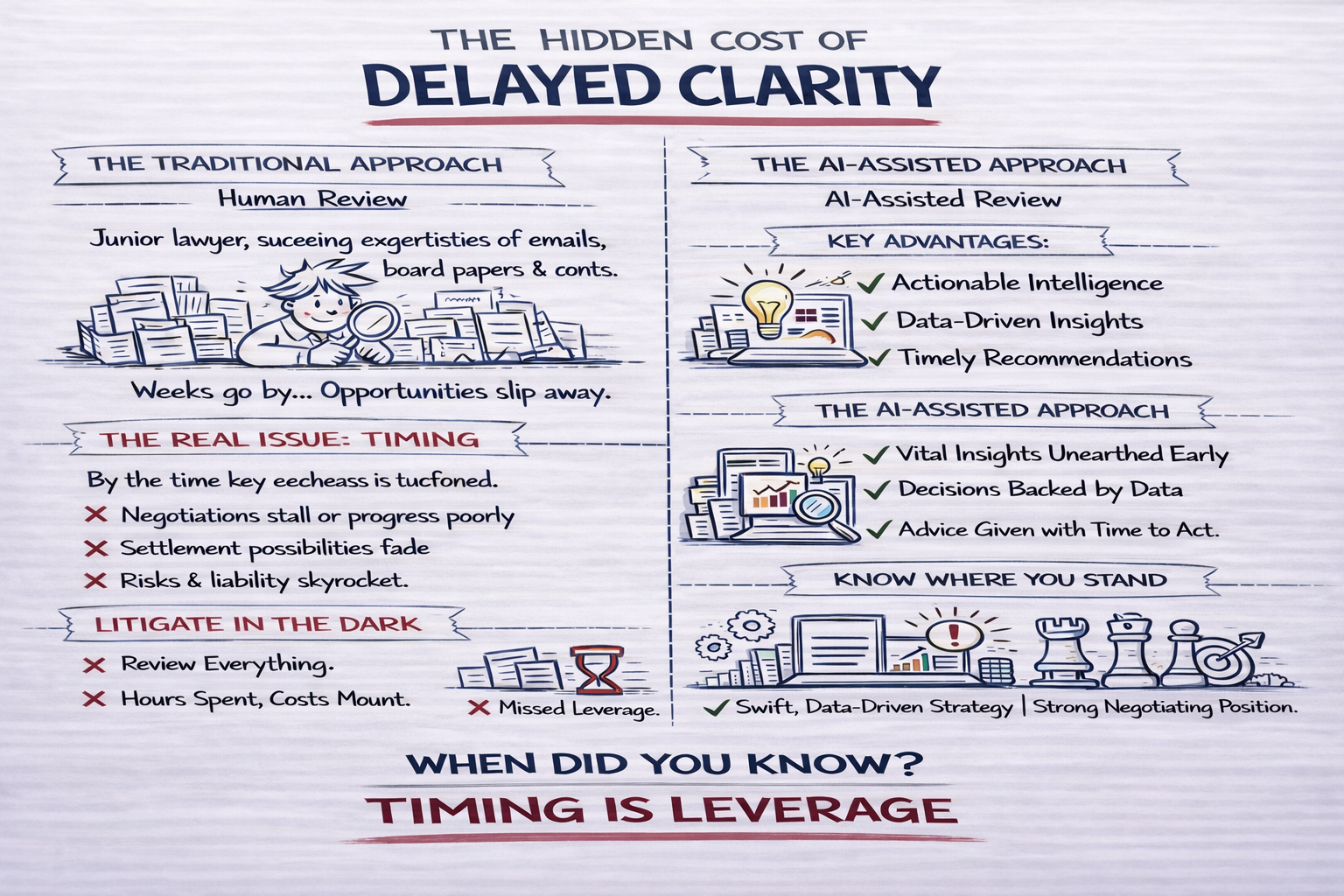
AI in Litigation and E-Discovery: Strategic Transformation Beyond Efficiency
AI in Litigation and E-Discovery: Strategic Transformation Beyond Efficiency Litigation has always been defined by…